

Inverted Doubles
Syllabus day!

Hi Snare Drummers,
Without intervention, the second note of our rebounded strokes tends to be too close in rhythm to the first and too soft, resulting in uneven double strokes. Strengthening this second note, therefore, is of fundamental importance to a percussionist interested in smooth, even rebounds. In Accents and Rebounds, George Stone waxes poetic on the possibilities of rebound control:
…if with either sticks or ball we could make rebounds (one or more) as strong in power as the initial impact, the sticks would rebound to perfection, the ball would bounce forever, and we would have discovered the secret of perpetual motion.1
For those of us interested only in smooth rolls and not infinite kinetic energy, inverted doubles are extremely useful. To help ameliorate the weakness of the second (and third, fourth, or fifth) rebound of a stroke, we artificially exaggerate our finger motion. These newly empowered fingers stabilize the arm and wrist-powered rebound strokes, helping the rebounds become more even without tension. We’ll explore another way of using our fingers—extending the length of rebound strokes—later.
Inverted doubles remind me of those BASF commercials from the 1990s: they don’t make the strokes, they make them better:
TL;DR: A Video Example
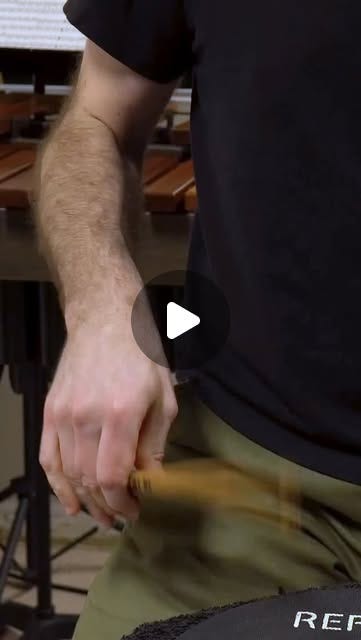
Full points for showing one’s work, so here goes:
Invention
How best to design an exercise around inverted doubles?
Put the 2nd note of a double stroke on the beat to aid inflection.
Do something to create space in the hand so that your fingers can snap extra hard on the 2nd note. I drop my wrist below the surface of the drum, opening the hand while keeping my fingers around the stick
Make as much difference as possible between the accented and unaccented notes. We would (almost) never play this way in real life, but it helps isolate and strengthen our muscles.
Start with one hand at a time, later using the other hand to fill in the space.
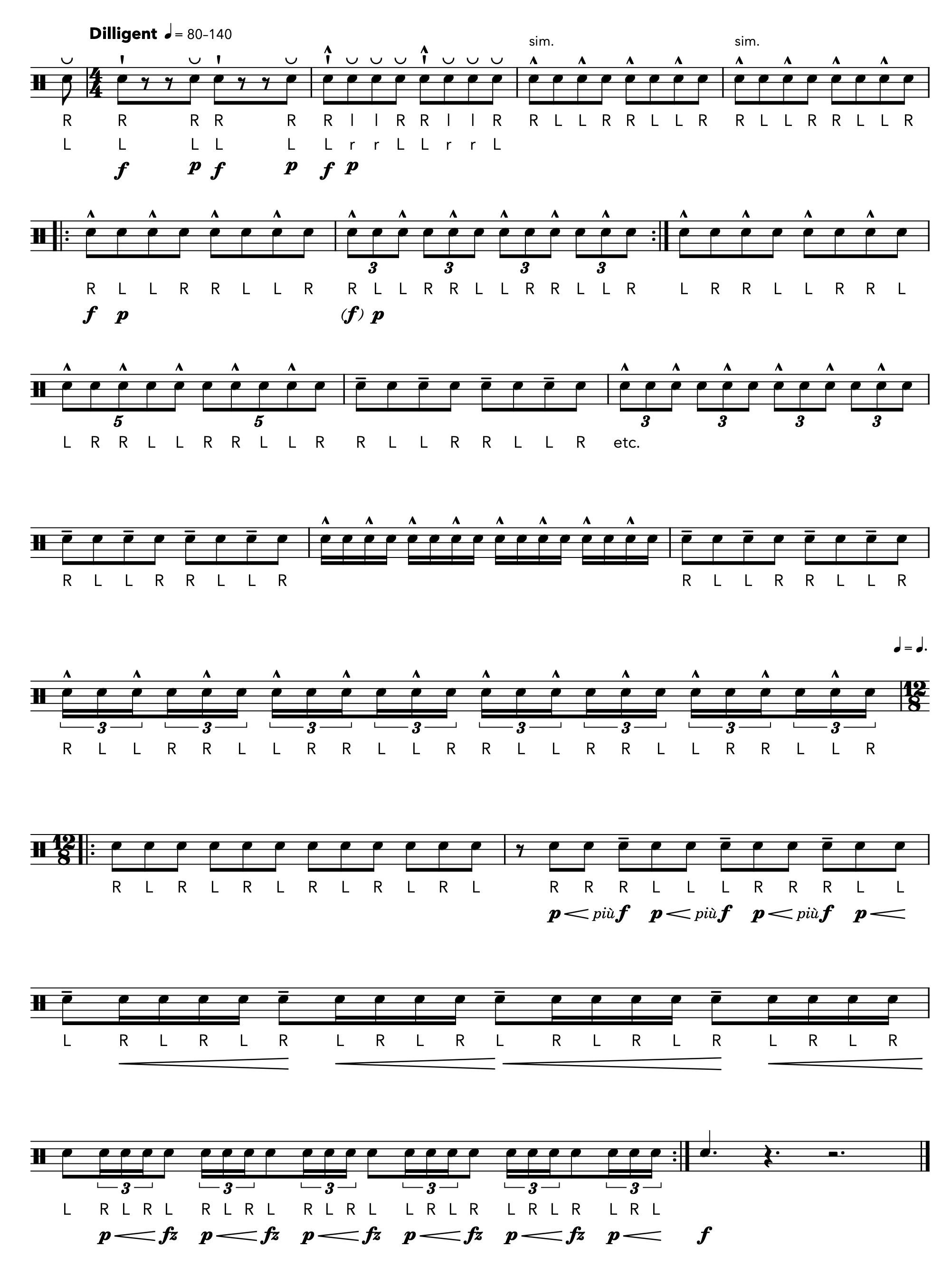
My first draft. In this exercise, I use scansion (the notation used in poetry to denote accented and unaccented syllables) to indicate stressed and unstressed notes.
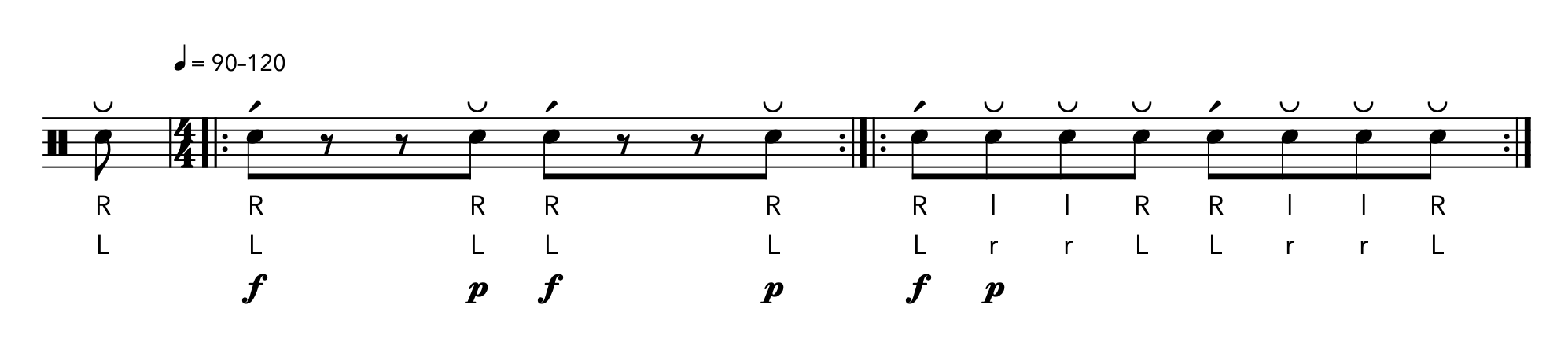
5-10 minutes on the first exercise is worth 20 minutes of practicing double strokes alone, so set a timer and get cracking.
After a few minutes of isolating the inverted stroke, try it with both hands, using tighter rhythms to test if the stroke is durable at faster tempi. Really snap these out using your fingers!

Testing
Check the exercise’s effectiveness by increasing the speed, turning the 16th notes into tuplets of increasing density, and keeping the metronome at the same setting.
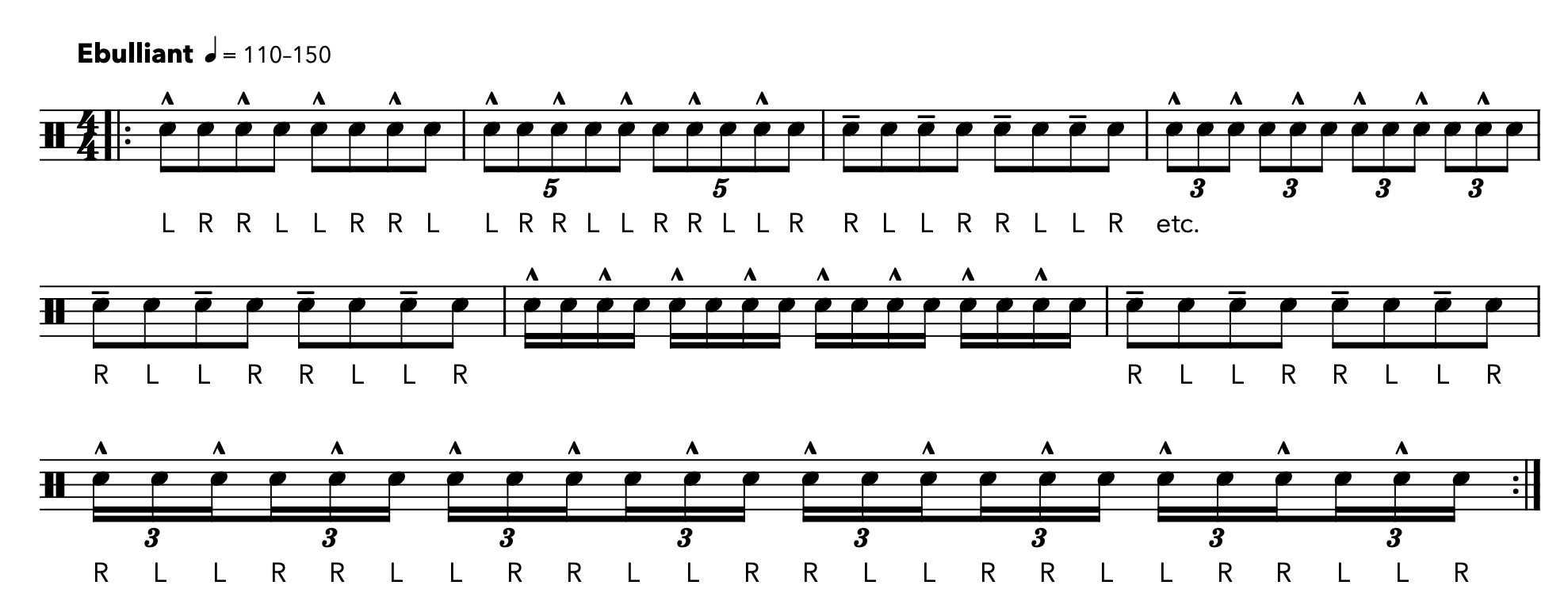
🕯️Remember, this is all just a derivation of the first exercise. Your variations and inventions can and should differ.
Make it Harder
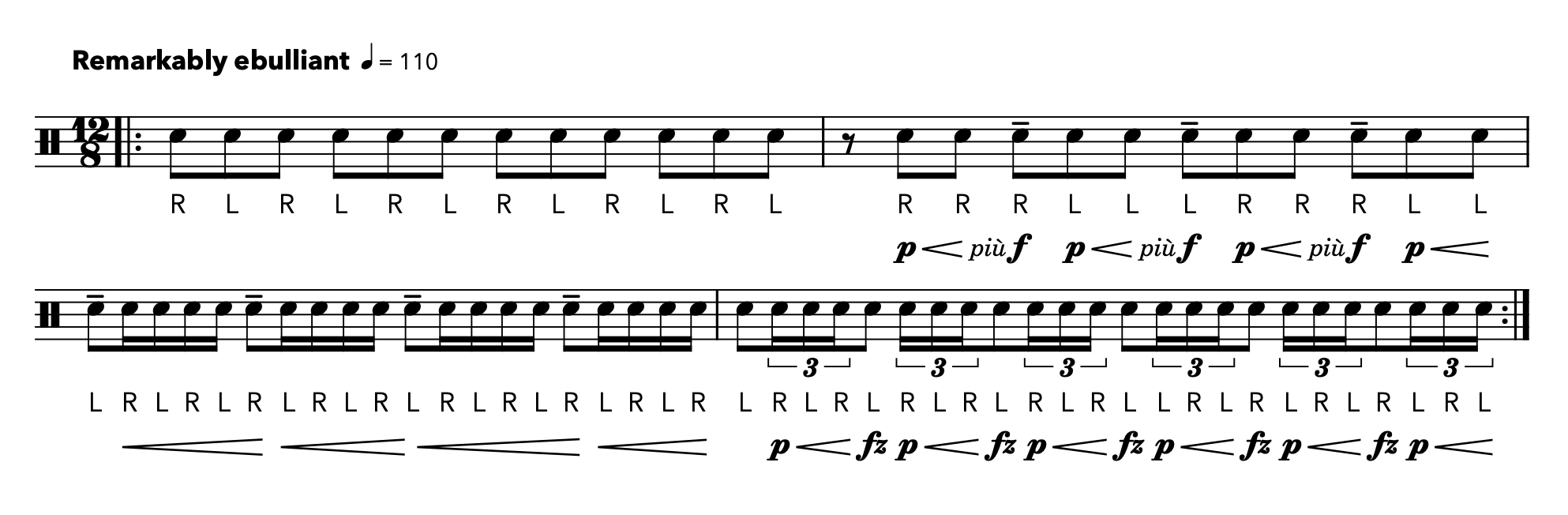
Next, a version of the “make it harder” practice I’ve discussed in previous newsletters. Here, three strokes in a row are more difficult than the original exercise, and the triplets also require faster finger motion. The first measure is a “check” pattern to ensure you are still keeping a relaxed hold on the sticks. Try this, and you’ll see the utility for Tompkins’ Nine French-American Rudimental Solos.
Put it Back
After 5-10 minutes of work on inverts, “put it back.” Check your progress on regular doubles: are they smoother and more even?
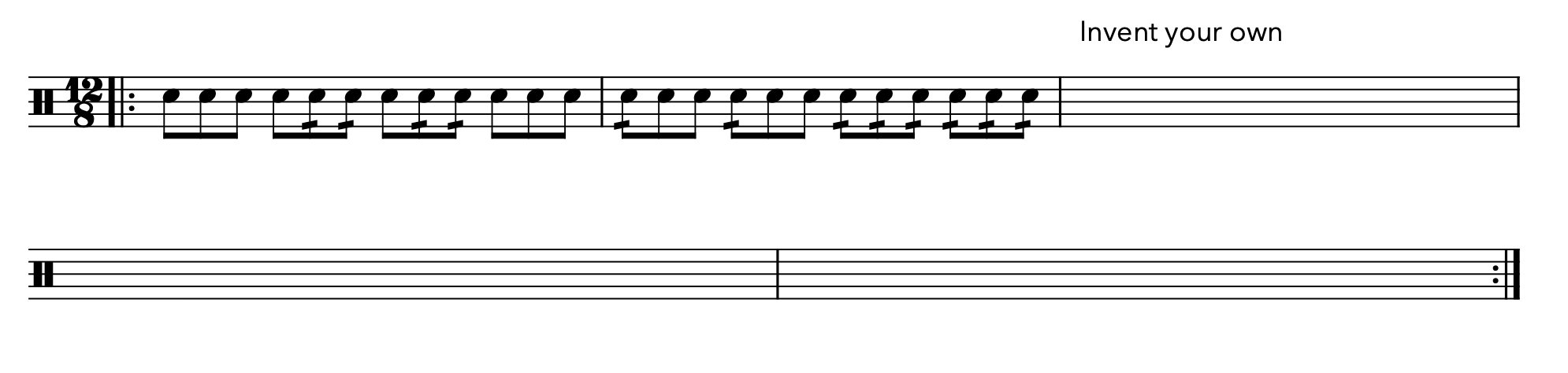
Final Exam: Make it Even Harder
Great chefs season their food as they cook. Great musicians test their phrasing as they practice to ensure they can execute on stage.
Practicing both the finger motion necessary for inverted doubles directly adjacent to its technical antonym—a wrist-activated throwing motion—helps ensure both mental models are distinct and rich.
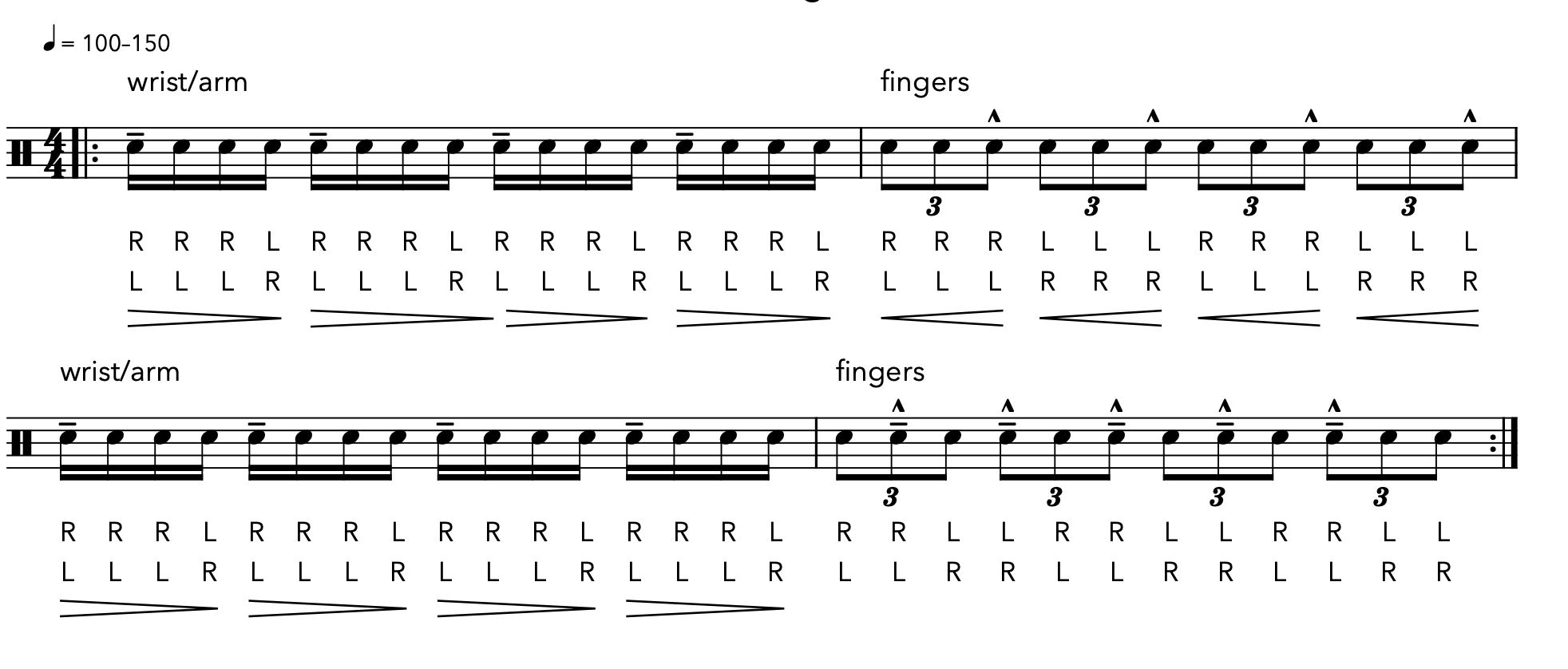
All the exercises as a suite…
Happy practicing!
George Lawrence Stone, Accents and Rebounds for the Snare Drum (George B. Stone & Son, Inc, 1961), 16.