

The Stone Tablet vs the Post-It
How important are your technical exercises?

Have you ever sat awake at night pondering the difference between a stone tablet and a Post-It? I have!
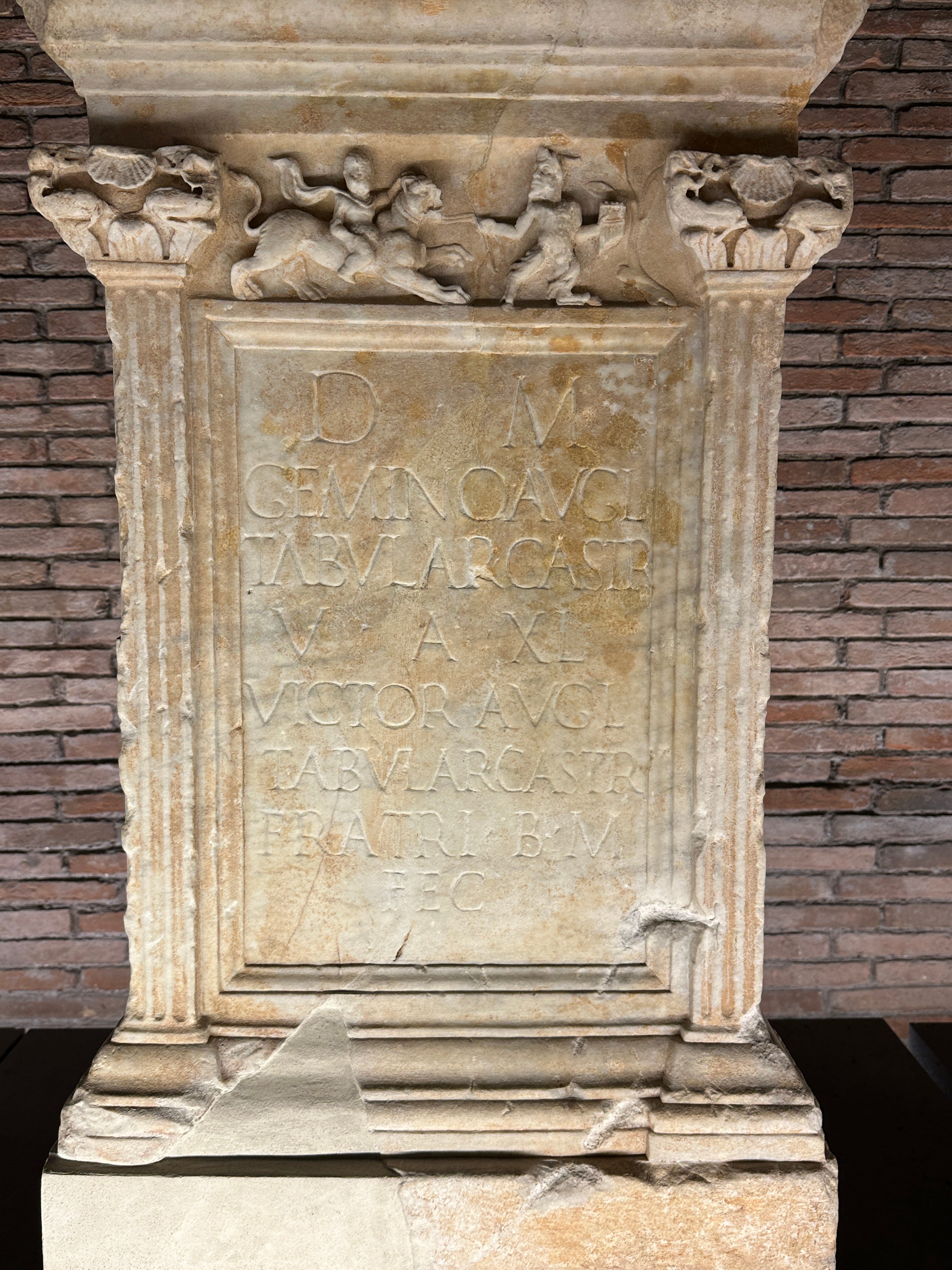
A stone tablet is permanent (mostly), and requires careful, meticulous design and craftsmanship. They commemorate, mark, and memorialize.
A Post-It is designed to be temporary. It’s sticky, but not forever. Its fluorescent coating screams “look at me,” but its small size and bountiful numbers say “I’m not important for long.”
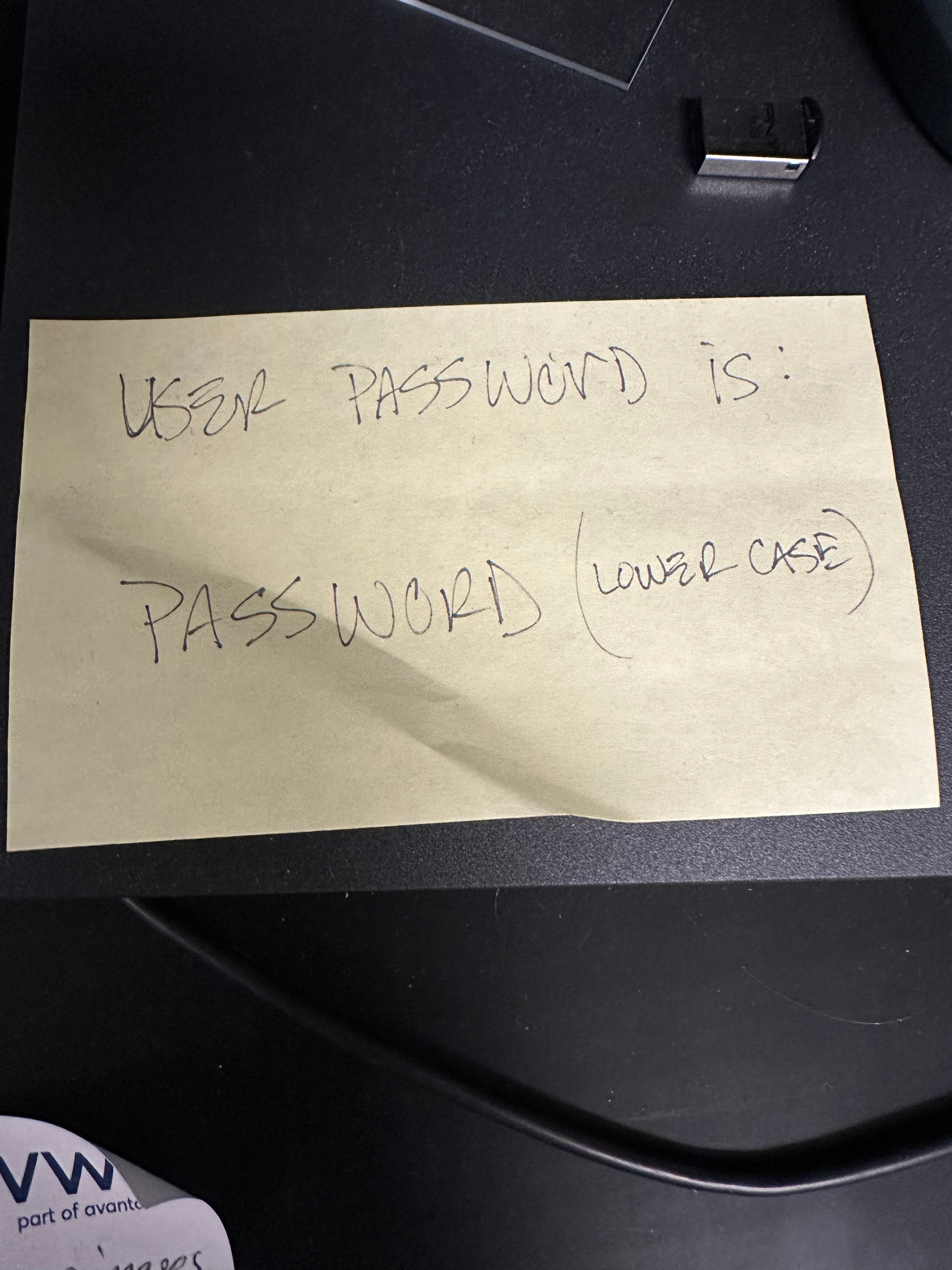
Daily to-do list? Post-It.
Gravestone? Stone Tablet
Optometrist’s phone number? Post-It.
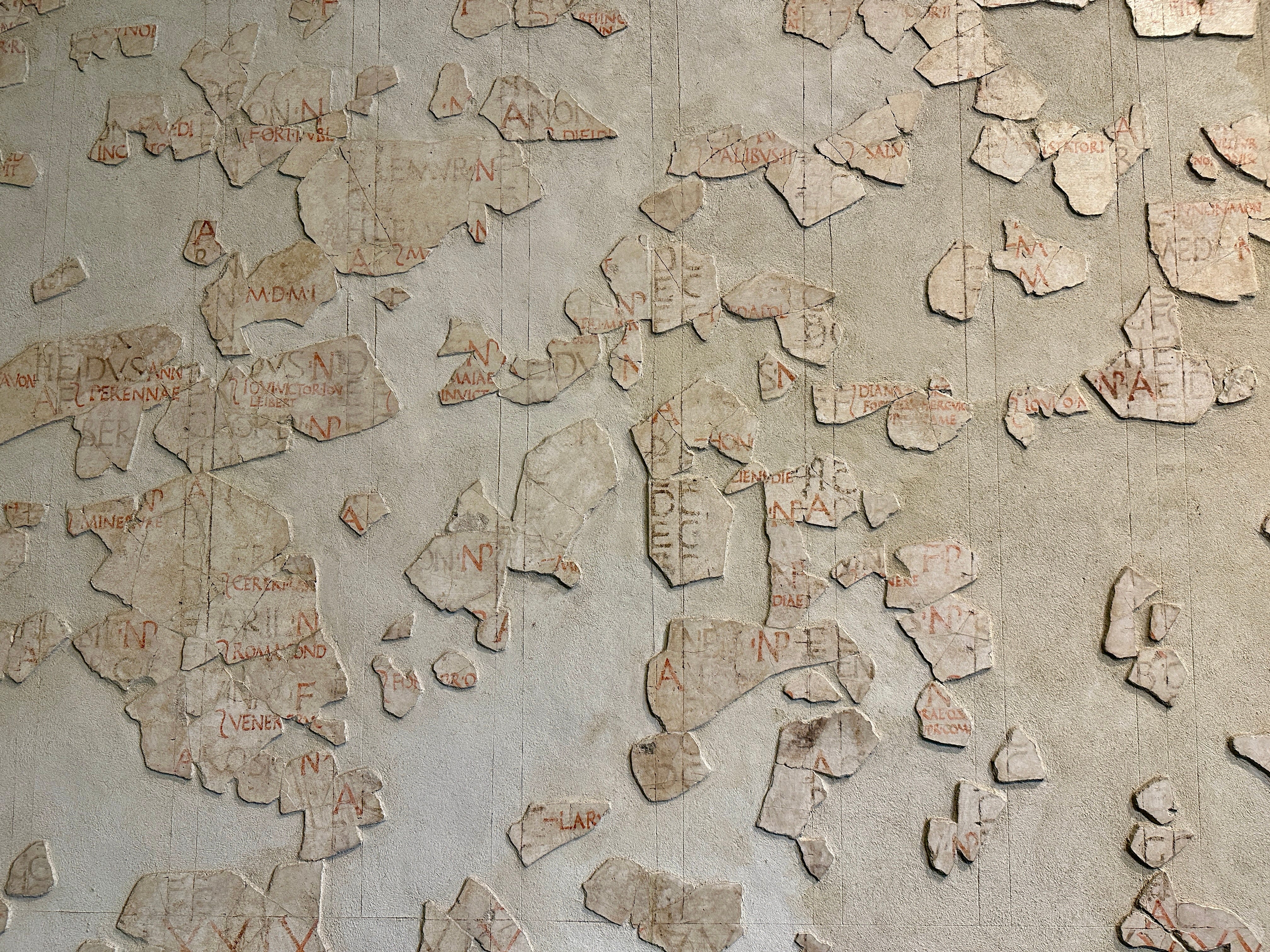
Roman calendar? Many stone tablets!
How do we improve the most effectively?
How do performing musicians most effectively increase our musical capacity, learn more quickly, and play with accuracy and precision? Asking for a friend.
With technical studies carved into marble in Trajan typeface, ready to be examined without change for millennia, or on whatever kind of paper Post-Its are made of, fickle, vulnerable to gusts of wind, and easily toss-able?
When practicing, I often create improvisational fragments to help me learn notes, recall music, or challenge my technique.
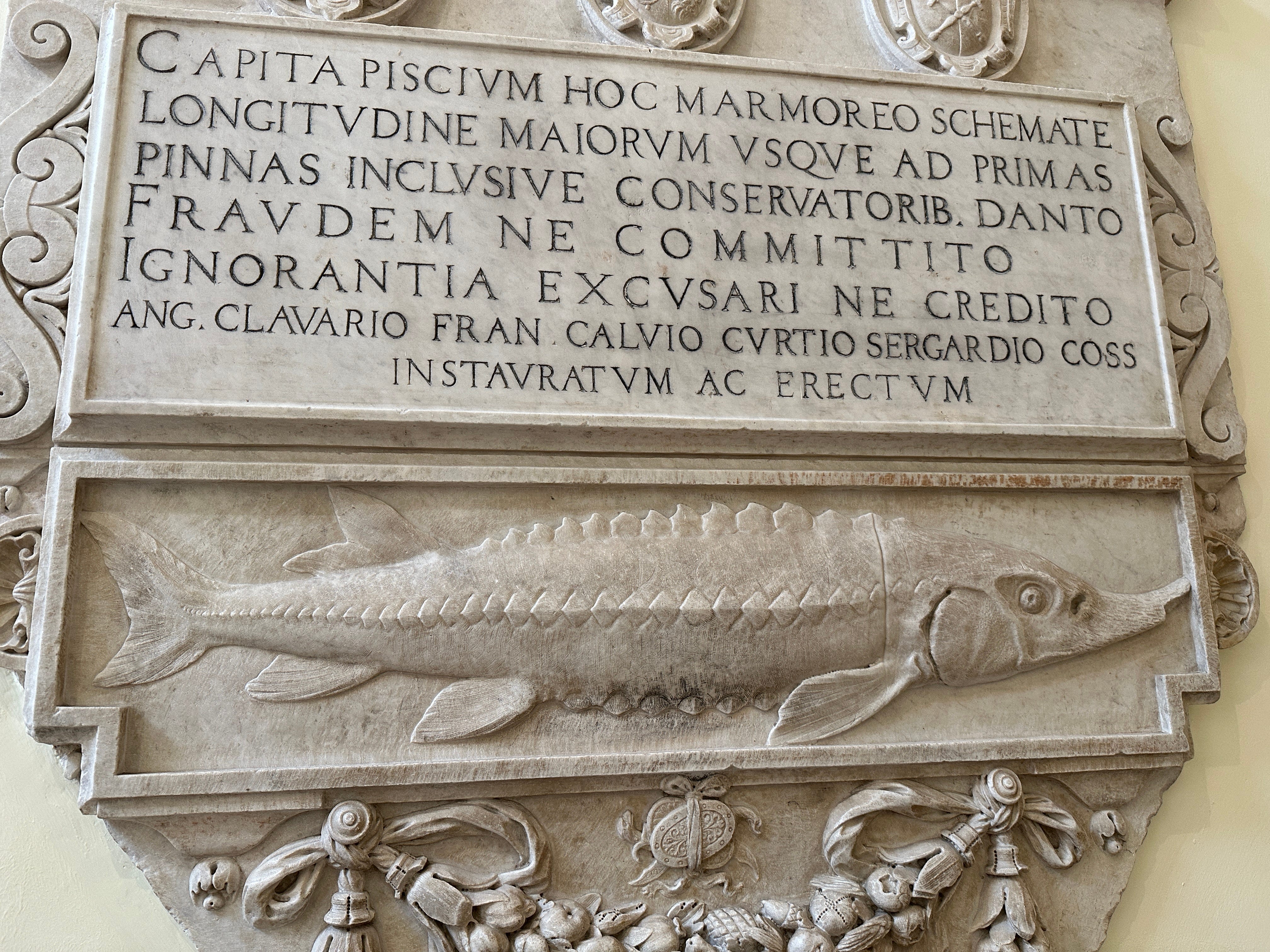
I used to think of these fragments like shards of Ancient Greek pottery, valuable missives from the great beyond, worthy of storage in a great museum.
But actually, they’re much more like Post-Its.
As my practice has shifted away from rote repetition towards improvisation and variation, I am finding that I need more timely, targeted material.
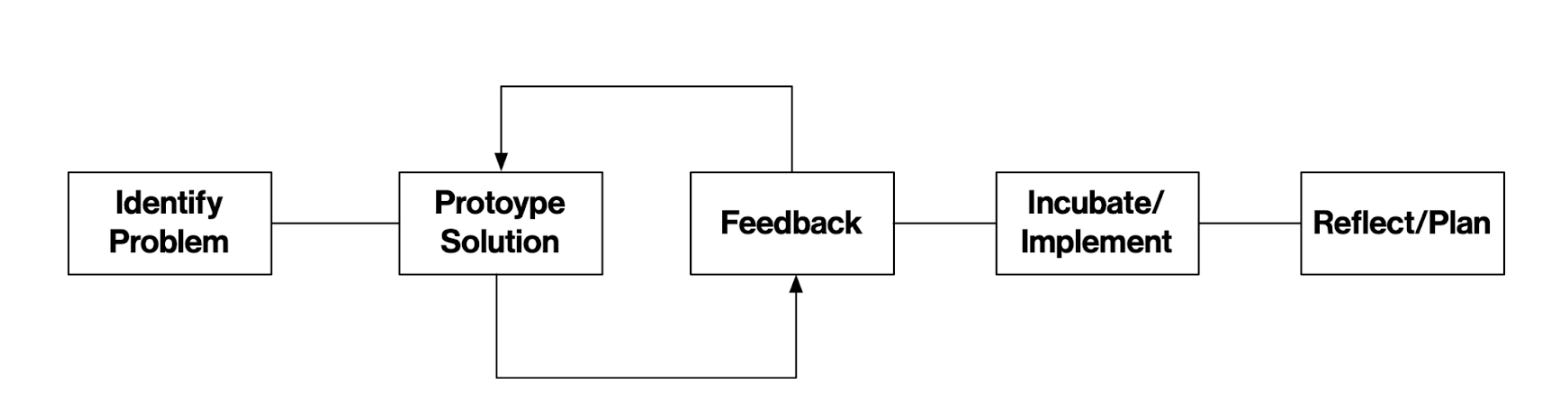
Much of my practice centers on petite musical nuggets invented on the spur of the moment to address an acute need and serve as a temporary solution. They are prototypes, living between “identify problem” and “get feedback” in the Design Thinking process.
What to do with these Post-Its?
I fully expect to crumple some up at the end of a session.
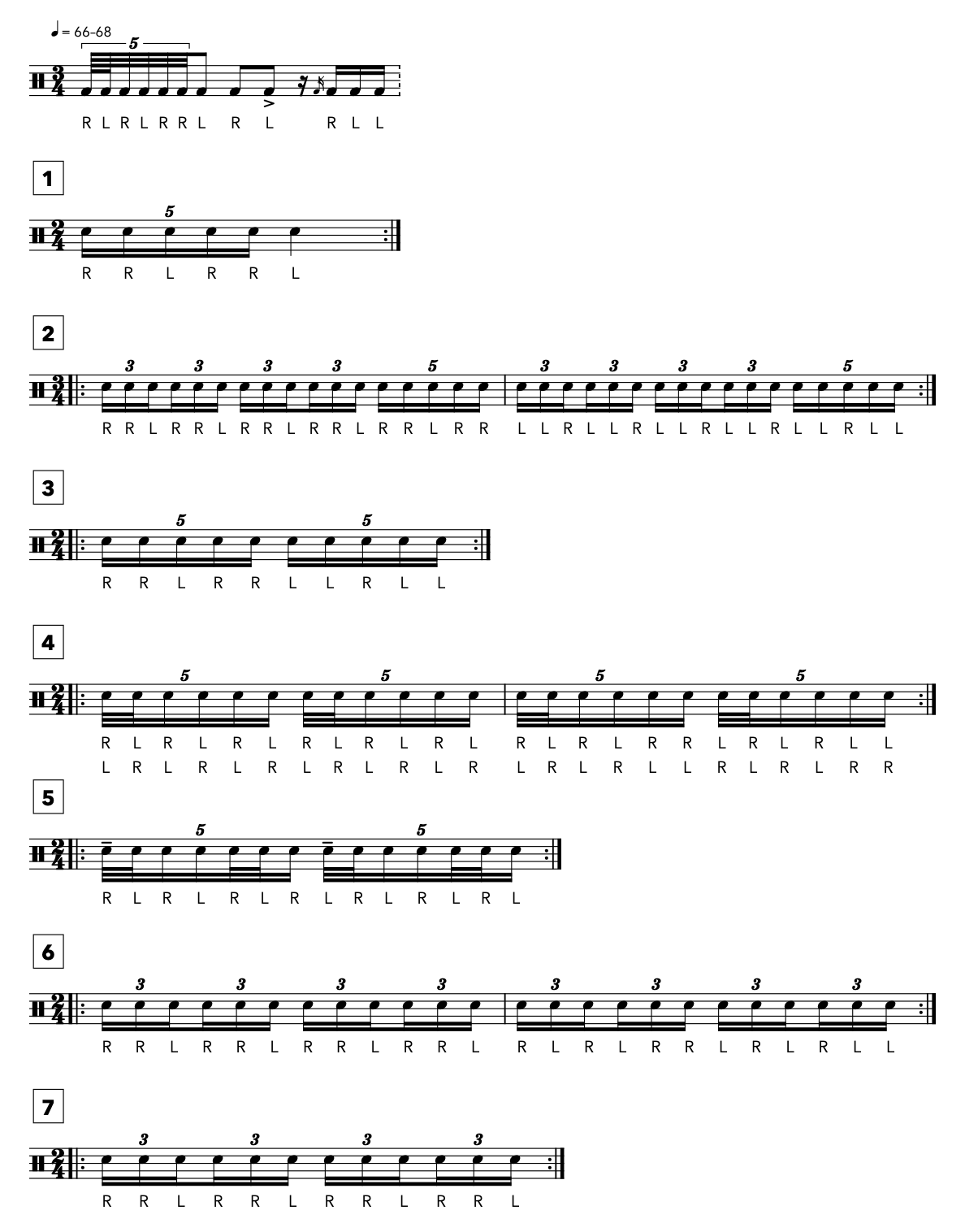
Sometimes, a collection of Post-Its can be upgraded to a Most-Wanted List, a collected worksheet of exercises clustered around a set of musical or technical problems that can then be incubated over days and weeks of practice. Here’s mine for the first measure of Joe Tompkins’ Nine French American Rudimental Solos, a tricky three quarter notes! I settled on these exercises after improvising with the material for a few minutes.
Still others will live in perpetuity, attached to the edge of my computer monitor, promoted to a Google Doc or a Notion page; they become part of my regular practice.
On a scale of “Post-It” to “Roman Marble Tablet,” how permanent should musical exercises be?
I lean towards Post-It, because I know that my needs and desires will change as my technique evolves. In fact, all technical studies lose utility over time. As we improve, we become immune to their challenges, and we should repeat the process of reevaluating and recomposing our exercises.
While one-size-fits-all broadsides (such as the first page of George Stone’s Stick Control) can do a great job of transforming technique from 0%-60%, the journey from 60-80% or 60-90% can only be undertaken with Deliberate Practice and Design Thinking, which require strong diagnostic ability, frequent feedback, and constant revision.
In my own practice, this improvisation-feedback loop happens daily. I find that I do not need to play specific exercises each time I practice. Working on similar types of exercises (and, by extension, musical techniques) helps me address challenges consistently, imaginatively, and, in the words of my teacher Robert van Sice, “soundfully.”
A huge amount of my new book, Unsnared Drum Lab, grew out of this idea: inventive, diagnostic, flexible practice. Despite having been working on the musical type setting for a number of months, I consider almost all the exercises in the book to be temporary stand-ins for something better that might come from the reader. Although I invite the reader to try my examples, I hope one engaging with the text will invent their own, more effective, more interesting musical missives throughout.
Just something to chew on!