


This week, I’m returning to my 7 Practices for Creative Practice:
Take on Big Problems
Experiment on Yourself
Turn Your Music into Exercises
Turn Your Exercises into Music
Practice Multi-Modally
Record Yourself for Instant Feedback.
Be Curious
Today’s edition:
Record Yourself for Instant Feedback or

For many percussionists, performance anxiety is akin to working at Severance’s Lumon Industries: a Mysterious and Important, often inscrutable, affair.
For those who didn’t watch the world’s slowest-moving show, employees at Lumon Industries sever their work and non-work personalities, each remaining unaware of what the other is doing. While watching Severance(at 200% speed), I was struck by the similarity between the characters’ desire to know what happens “at work” and my own desire to understand what happens in my mind and my hands while on stage.
Perhaps you’ve experienced this as well?
I know my Innie—my on-stage self—is struggling with a number of performance-related issues, and responding to them in real-time. But, my Outie—my practice-room-based Mike—is unaware of what happens in the performance. At times, all I see is the results of performance anxiety: the missed notes, the flat, expressionless playing.
I know I should do something to work on this, but what? I recommend that musicians address performance anxiety through both their practice habits and a concerted study of the feedback they receive while performing under pressure.
We receive feedback in our playing from our peers, teachers, and coaches, and—most importantly—from ourselves. Since much of our time is spent practicing alone, developing the ability to critique our own playing is crucial for effective musical growth. However, self-feedback is challenging and often intertwined with emotional judgments, making it difficult to separate our performance personality from our critical thinking mode. Mastering self-feedback thus requires a shift in mindset: we must become our own coach.
Creativity
Why do I consider self-diagnosis a creative act? It combines active and objective listening with comparison against some notion of how something should be (a mental representation). It requires thoughtful and responsive ears, a deft touch with adjectives (try and come up with 5 specific words to describe your playing after hearing a recording), and the ability to determine a specific course of action based on what has just been heard. Sounds like creativity to me!
The best (and most creative) self-feedback begins with recording oneself. Here are a few ideas:
Small Scale: Record, Refine, Repeat
There is a wealth of literature available on the power of Deliberate Practice. Sometimes, however, it can be challenging for a performer to diagnose their issues while playing in a way that enables the scientific rigor of Deliberate Practice. Recording helps!
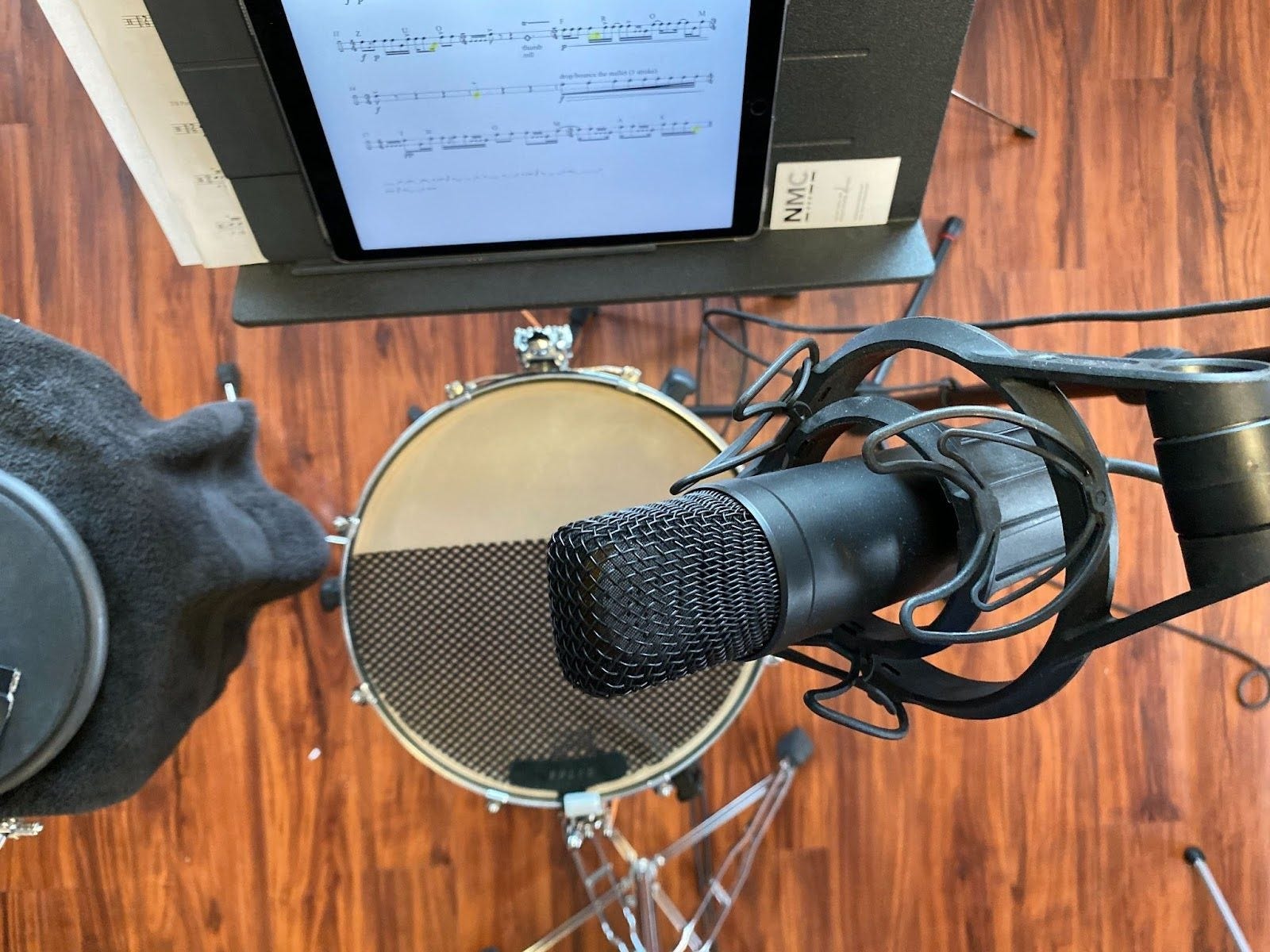
Pick a small and troublesome musical span (preferably under 20 seconds).
Record yourself playing this section. Hopefully audio only!
Listen back three or four times, each time focusing on a different parameter, such as phrasing, timing, tone quality, intonation, or pulse control.
Give yourself specific, actionable, dispassionate feedback, drawing upon your own mental models. (No “This sounds bad” allowed! Be clear: “The E-flat in measure 5 is sharp,” or “I’m missing the interval leap in measure 2.”)
Address one issue at a time, utilizing every available practice technique.
This process should take around 10 minutes. By focusing on a small section, this approach also develops process cues aimed at solidifying the memory and execution of musical material – it creates a mental “bookmark” in your repertoire at this section, allowing you to recover from issues more easily during a performance while helping you to more accurately and precisely execute the material under pressure. This approach also leverages spaced repetition while enhancing one’s mental model through critical listening. Over time, diagnostic abilities and the toolkit of practice techniques will grow.
What if you don’t know what’s wrong, take a cue from another one of my newsletters, and leverage Design Thinking: Brainstorm potential issues. Prototype a variety of changes, interpretations, or other variants, and try them quickly, getting feedback on their efficacy.
Medium Scale: More “Performance Mode”
When we practice, our goal is to think critically about our own playing, diagnosing issues, and planning our next steps. When we perform, that immediate feedback can short-circuit the flow state associated with peak performance. At times, our performances on stage fall short precisely because of this urge to offer critical feedback in the practice room: we have not spent enough time in “performance mode.”
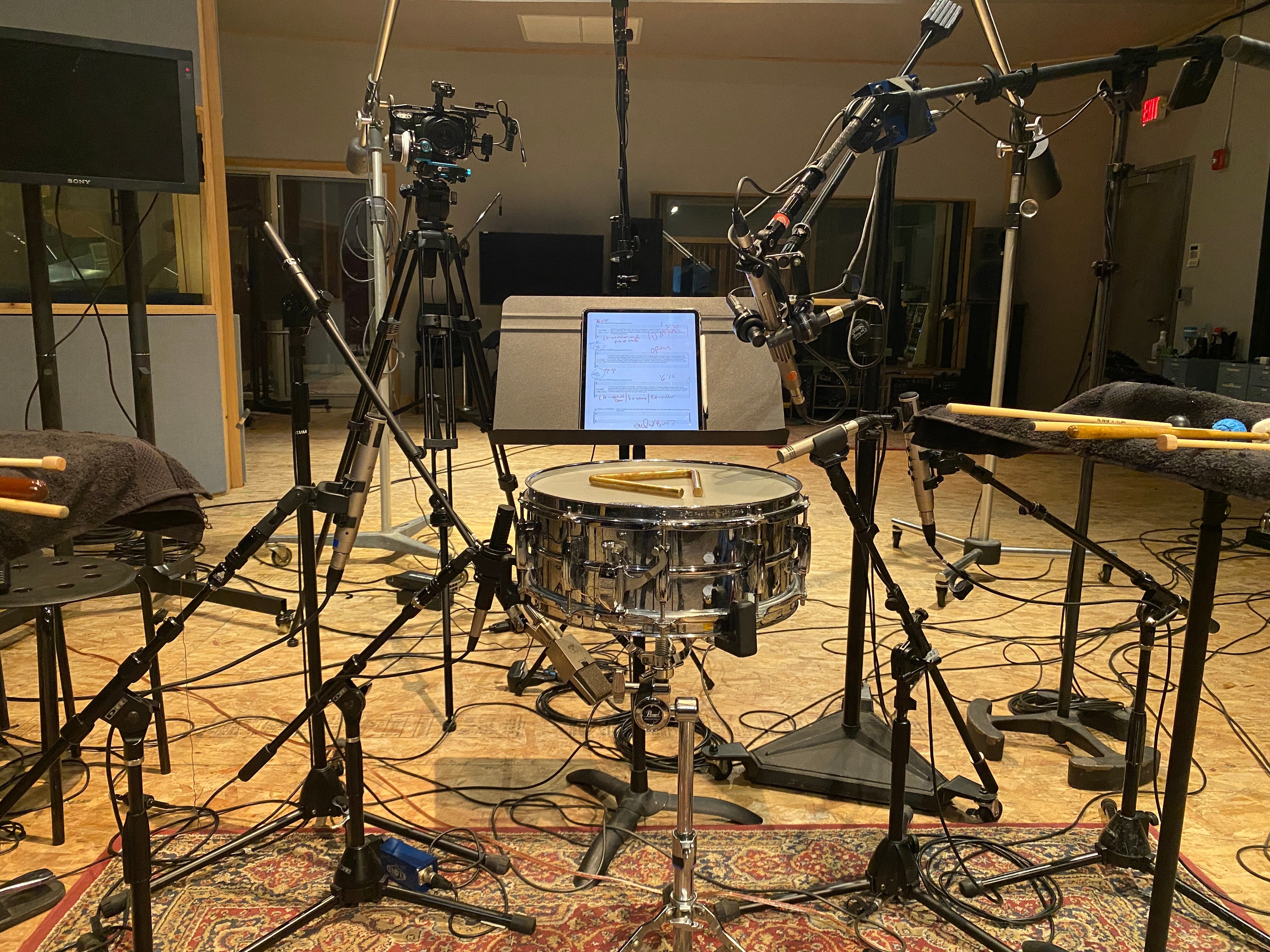
We can grow our performative skills by putting ourselves into “performance mode,” recording the performance to facilitate critical thinking after the fact. Over time, one can quickly enter this reflexive performance mode more readily. A formal performance is not required to enter this performance mode: playing for peers or coaches, or even simply pressing “record,” can often be sufficient to foster this mindset.
I made an AI-enhanced video explaining this concept here:
Record a medium-sized chunk of music. Here, using a medium-sized chunk is essential. Too often, we practice our performance skills by running through entire pieces. This is akin to jumping from a warm-up to a marathon, with no smaller races in between. Not a great idea.
Before listening, reflect on the performance, noting your mistakes and keeping track of your emotional and mental state.
Then, listen critically to the recording and compare your perception to reality. Does it sound the way you imagined? If not, what is different?
Categorize the issues: are they randomized or consistent? Small things (missed notes, bad transition), or systemic—a lack of dynamic contrast or tendency to compress fast passages?
With time and effort, one can better articulate the impact of performance anxiety on one’s playing and learn to practice in ways that support effective musical portrayals.
This technique can also be used to calibrate your interpretations to different acoustics and performance environments. Orchestral players will frequently use their colleagues or recordings to help hone their sound in different acoustics, calibrating their sense of their sound up close with the reality from hundreds of feet away. In chamber music, I find listening to a performance at a later date can help me calibrate my interpretations: did that moment land the way I wanted it to, or was my inflection too small for the space?
—
For a more detailed guide to recording yourself in the practice room, please see here:
Recording in the Practice Room — Michael Compitello
Happy Practicing—wait, I mean happy performing!
Insightful. Thank you for putting into words that mysterious gap between practice and performance, it realy resonates. It makes you wonder about the complex architecture of our own minds and how to best debug those real-time performance issues.